Home › Guides
Adult Cat Diet: Feeding a Healthy Cat from 1 to 7 Years
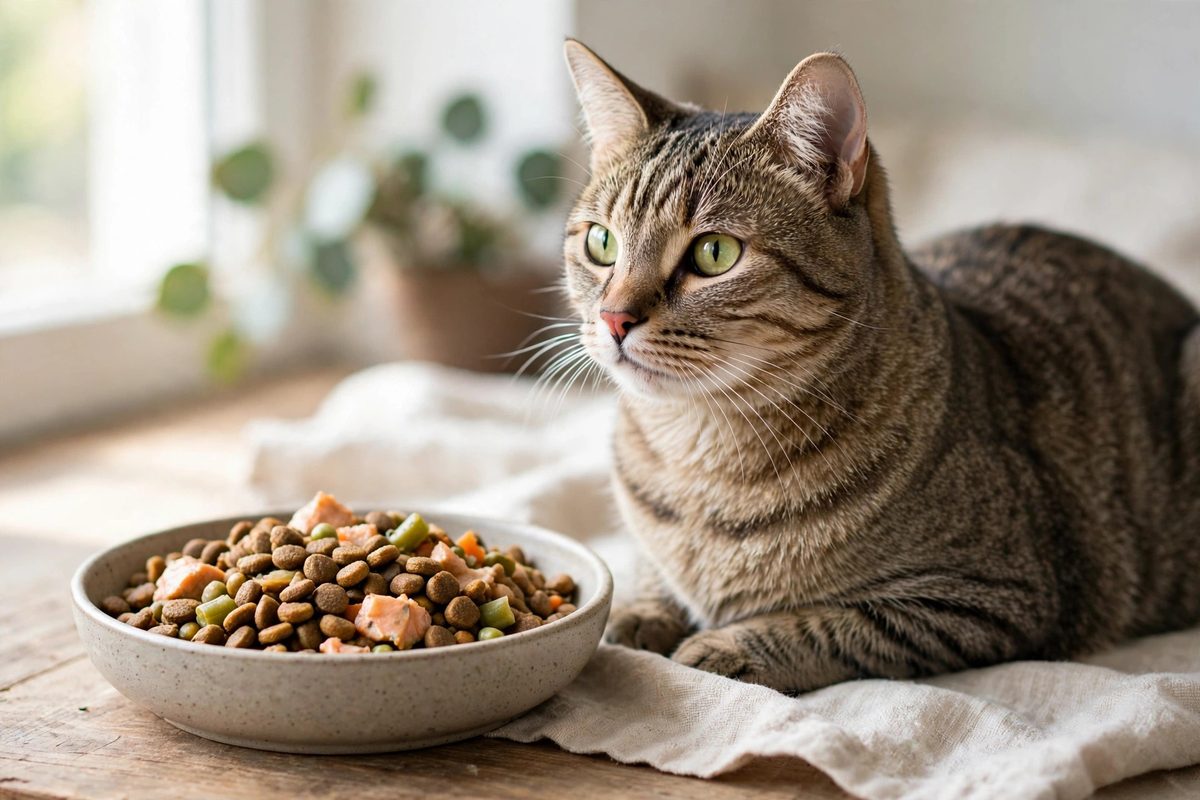
An adult cat's diet has one main job: keep a healthy cat healthy. Between one and seven years old, a cat is no longer growing and not yet slowing down, so the goal is steady weight, good muscle, a shiny coat and enough water. That sounds simple, yet most feeding problems start in these years, usually from portions that creep up unnoticed.
What an adult cat actually needs
Cats are obligate carnivores, which means they must eat animal protein to get nutrients such as taurine and arachidonic acid that their bodies cannot make. A complete adult cat food supplies these in the right balance, along with vitamins and minerals. A food labelled complete and balanced for adult maintenance is the safest base for the diet.
Protein should come mainly from named animal sources such as chicken, fish or lamb. Carbohydrates are not harmful in the amounts found in a good commercial food, but they should not crowd out protein. Fat provides energy and keeps the coat healthy, but it is also where extra calories hide, so rich foods and oily treats add up fast.
How many calories and how often
A typical neutered adult cat of about four kilograms needs roughly 200 to 250 calories a day, but the range is wide. Active cats need more, quiet indoor cats need less, and larger breeds need more than small ones. Use the calorie calculator on our homepage as a starting point, then adjust by watching the cat's weight over a few weeks.
Two measured meals a day suits most adult cats. Free feeding, leaving a full bowl down all day, makes it hard to know how much the cat eats and is a common cause of slow weight gain. Measure food with kitchen scales or a marked scoop, and keep a note of how much you serve for a week if weight is a concern.
Wet food, dry food, or both
Wet food is about 70 to 80 percent water, which helps a cat stay hydrated and can support urinary health. Dry food is convenient, cheaper per calorie and easier to leave in a puzzle feeder. Neither is clearly better for every cat. Many vets suggest a mix: wet food for moisture and dry food for convenience.
If your cat eats only dry food, make sure fresh water is always available and consider a water fountain, since many cats prefer running water. If your cat eats only wet food, watch the teeth, because dry food does not clean teeth on its own and dental care still matters.
Treats and table scraps
Treats should stay under ten percent of daily calories, which for a typical cat means only a few small treats a day. Commercial cat treats are fine in small amounts. Table scraps are a worse deal: they are often salty or fatty and can unbalance a diet that is already complete.
Never feed onion, garlic, grapes, raisins, chocolate, cooked bones or xylitol-sweetened foods. These are toxic or dangerous for cats. If your cat eats something suspicious, call your vet rather than waiting to see what happens.
Signs the diet is working
A well-fed adult cat holds a steady weight, has a visible waist from above, and ribs you can feel without pressing hard. The coat should be smooth and glossy, the eyes bright, and the energy steady through the day. Stools should be firm and regular.
Slow changes are the ones to watch. A gradual weight gain of a few hundred grams a year, a duller coat, or drinking much more water than usual can all be early signs worth mentioning at a vet check. An annual check is a good moment to review the diet together.
Frequently Asked Questions
How much should I feed my adult cat each day?
Start with the pack guideline for your cat's weight, then adjust. A 4 kg neutered adult usually needs about 200 to 250 kcal a day, split across two meals.
Is it okay to feed only dry food?
Yes, if it is a complete food and the cat drinks enough water. Many owners mix wet and dry to add moisture and variety.
Can I change my cat's food brand?
Yes, but do it gradually over seven to ten days, mixing the new food in a little at a time to avoid an upset stomach.