Home › Guides
Cat Nutrition Myths: 7 Myths That Could Harm Your Cat
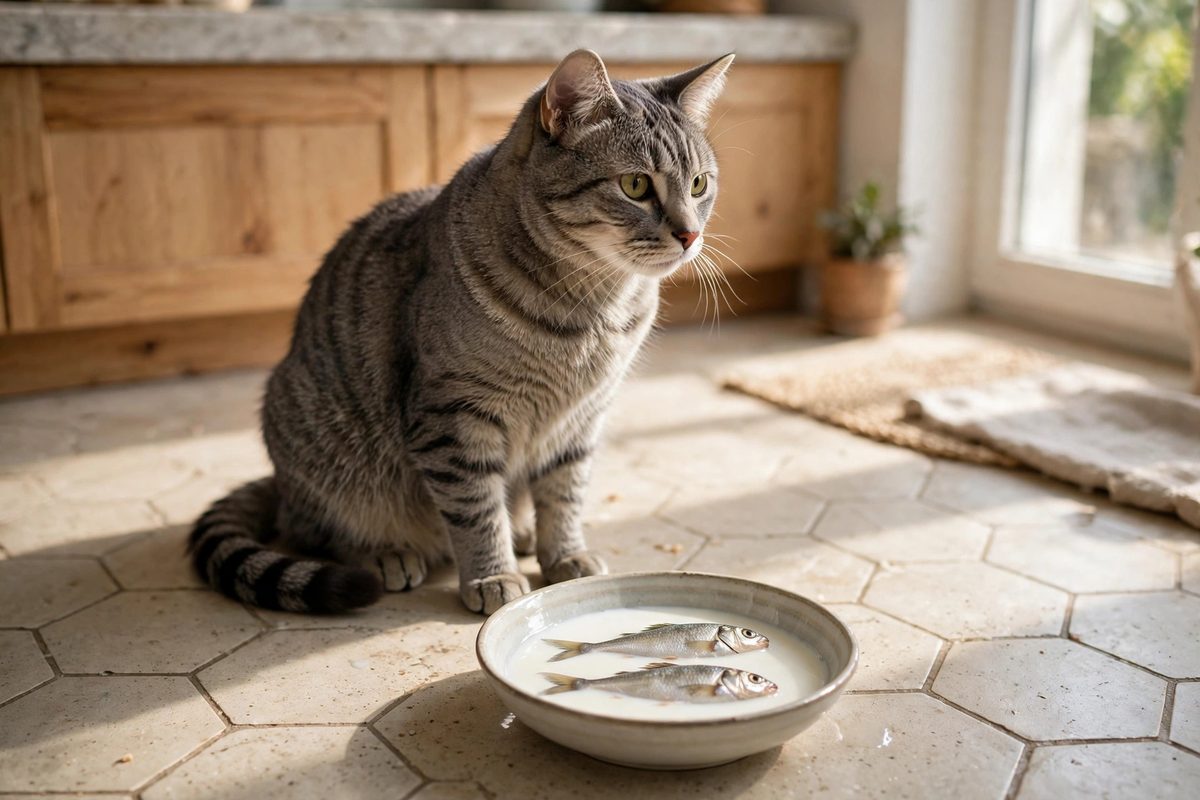
Cat nutrition attracts more myths than almost any other part of pet care. Advice passed down through families, repeated on social media, or printed on pet food packets can be wrong, outdated, or simply made up. Some myths are harmless. Others can make a cat ill. These are the seven we hear most often, and the truth behind each one.
Myth 1: Cats need milk
The image of a cat lapping a saucer of milk is everywhere, but most adult cats cannot digest lactose, the sugar in milk. Milk often causes diarrhoea and stomach pain. Kittens need their mother's milk or a proper milk replacer, not cow's milk, and adult cats need fresh water, not milk.
A small amount of milk as an occasional treat is fine for some cats, but it should never be a regular drink. If your cat loves milk, offer a lactose-free cat milk instead, and only in small amounts.
Myth 2: Cats should eat only fish
Fish is a good protein, but a diet of fish alone is unbalanced. Fish is low in some nutrients cats need, and some fish contain thiaminase, an enzyme that destroys vitamin B1. A diet of raw fish can cause a serious vitamin deficiency.
Fish should be one protein among several, fed cooked, and not every day. A cat that eats only tuna, for example, can develop a vitamin E deficiency and a painful condition called steatitis. Variety and balance matter more than any single ingredient.
Myth 3: Dry food cleans teeth
Ordinary kibble does not clean teeth. Most cats swallow kibble whole or crack it once, so it never scrapes the tooth surface. Dental disease is common in cats fed dry food, wet food, and raw food alike. Only specific veterinary dental diets are designed to help, and even those support brushing rather than replacing it.
Myth 4: Garlic is a natural flea treatment
Garlic is toxic to cats. It damages red blood cells and can cause anaemia, and there is no evidence that it prevents fleas. The dose in a flea treatment is not a dose at all, because garlic does not work as a flea treatment. Use a proper flea product from your vet instead.
Myth 5: Cats need a varied diet
Cats do not need variety the way people do. A complete food provides everything a cat needs, every day, and changing foods frequently can cause digestive upset. Some cats enjoy variety, and a rotation between two or three foods is fine, but it is not a nutritional need. What cats need is consistency and balance.
Myth 6: Table scraps are fine in small amounts
Small amounts of plain cooked meat are fine, but most table scraps are salty, fatty, or seasoned with onion and garlic. They add calories without balanced nutrition and can cause stomach upsets. A cat that eats table scraps regularly can become fussy and refuse its own food. Keep human food out of the bowl.
Myth 7: A fat cat is a happy cat
A fat cat is not a happy cat. Extra weight strains joints, raises the risk of diabetes, and shortens life. Cats do not enjoy being overweight; they enjoy food, and it is our job to give them the right amount. A healthy weight, regular play, and measured meals are what make a cat happy.
Frequently Asked Questions
Is milk really bad for cats?
Most adult cats cannot digest lactose well, so milk often causes diarrhoea. Fresh water is the right drink for a cat.
Does my cat need a varied diet?
No. A complete food provides everything a cat needs. Variety is optional, and frequent changes can upset the stomach.
Is garlic safe for cats?
No. Garlic is toxic to cats and can damage red blood cells. Never use it as a flea treatment or a food additive.