Home › Guides
Cat Supplements: Do Cats Need Them, and Which Are Safe?
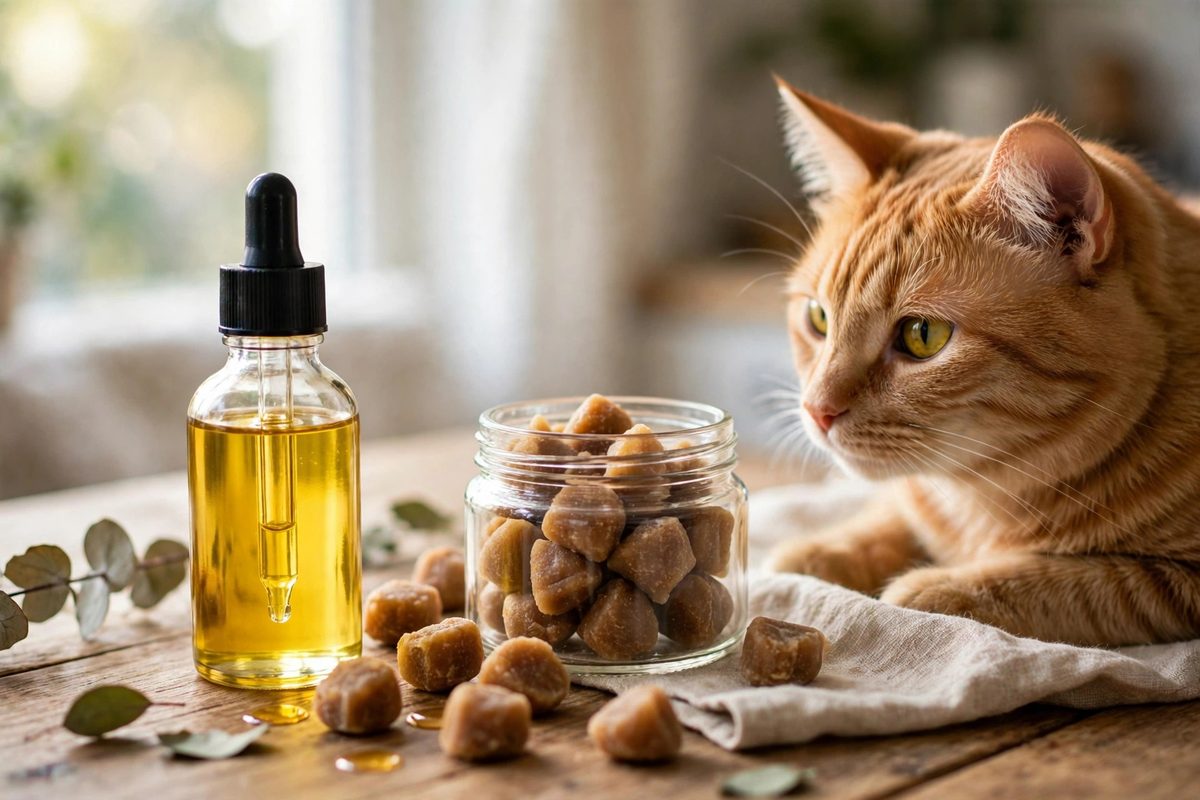
Pet shop shelves are full of supplements that promise shinier coats, healthier joints, calmer cats, and stronger immune systems. It is tempting to add a scoop of something to the bowl, just in case. But most cats eating a complete food do not need supplements at all, and some supplements can do harm. Knowing when a supplement helps, and when it is a waste of money, saves both.
Do healthy cats need supplements?
A healthy cat eating a complete and balanced food already gets the vitamins, minerals, and fatty acids it needs. Adding more of a nutrient the cat already has enough of does not make the cat healthier; the excess is either excreted or, in the case of fat-soluble vitamins such as A and D, stored, where too much can be toxic.
Supplements make sense when a vet identifies a specific need, such as a joint problem, a skin condition, or a deficiency caused by illness or a homemade diet. They are a treatment for a problem, not a general insurance policy.
Omega-3 fatty acids
Omega-3 fatty acids from fish oil are the best-studied cat supplement. They can help with skin and coat health, and there is evidence they support joint comfort in older cats. Use a product made for cats, at the dose your vet recommends, and store it properly, because fish oil goes rancid quickly.
Too much fish oil can cause diarrhoea and can interfere with blood clotting, so do not exceed the recommended dose. Cod liver oil is not the same as fish oil; it contains high levels of vitamin A and D and can be toxic in large amounts.
Probiotics and joint supplements
Probiotics can help some cats with digestive upsets, especially after antibiotics or a change of diet. The evidence is mixed, and the benefit depends on the strain and the dose. Choose a product made for cats with a named strain, and ask your vet whether it suits your cat's problem.
Joint supplements containing glucosamine and chondroitin are popular for older cats, but the evidence in cats is limited. Some cats seem more comfortable on them, and they are generally safe, but they are not a substitute for weight control and pain relief prescribed by a vet.
Supplements to be careful with
Be cautious with herbal supplements, which are poorly regulated and can interact with medicines or harm the liver. Avoid human supplements, which may contain xylitol, garlic, or doses far too high for a cat. Vitamin supplements are rarely needed and can be dangerous in excess.
Always tell your vet about any supplement you give, because it can affect blood tests, medicines, and treatment plans. Buy supplements from reputable brands that publish their ingredients and doses, and be sceptical of products that promise to cure disease.
A simple decision checklist
Before buying any supplement, ask five questions. Is my cat eating a complete food? Has a vet identified a specific need? Is the product made for cats, with a clear dose? Could it interact with any medicine my cat takes? And is there evidence that it helps with this problem? If the answer to any of these is no, or you do not know, ask your vet before buying.
A supplement that passes the checklist is worth trying for a month, and then judging honestly. Keep a note of what you hoped it would do, and whether it did it. If there is no change, stop buying it. Supplements are not a substitute for a good diet, weight control, or veterinary treatment.
Frequently Asked Questions
Does my cat need a vitamin supplement?
No, if it eats a complete and balanced food. Extra vitamins are usually unnecessary and, for vitamins A and D, can be toxic in excess.
Is fish oil good for cats?
Fish oil can help skin, coat and joints in some cats. Use a cat product at the vet-recommended dose, and store it away from heat and light.
Are joint supplements worth trying for an older cat?
They are generally safe and some cats seem more comfortable, but the evidence is limited. Weight control and vet-prescribed pain relief matter more.