Home › Guides
Hydration for Cats: How to Get Your Cat Drinking More Water
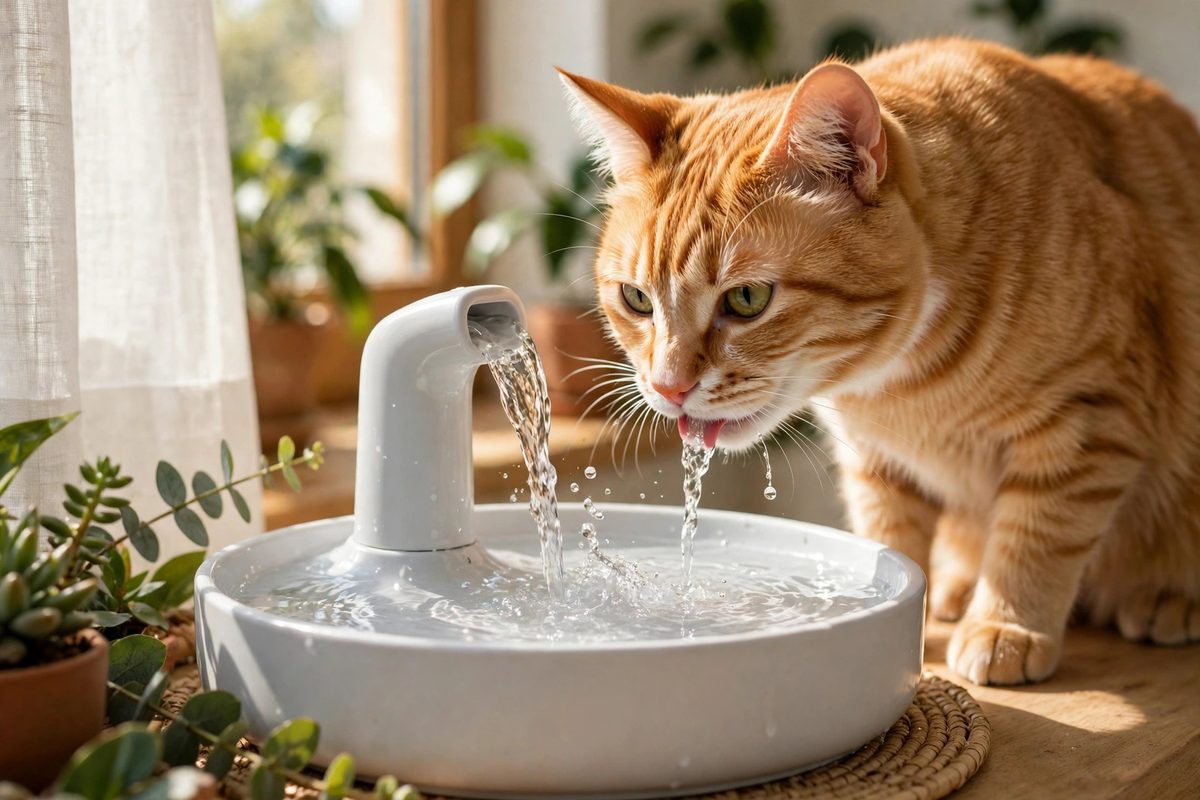
Cats are famously bad at drinking water. Their ancestors were desert animals that got most of their moisture from prey, so the thirst drive in a domestic cat is weak. Many cats live in a state of mild dehydration without anyone noticing, and over years that can strain the kidneys and the urinary tract. Helping a cat drink more is one of the simplest things you can do for its long-term health.
How much water does a cat need
A cat needs roughly 40 to 60 millilitres of water per kilogram of body weight per day, from food and drinking combined. A 4 kg cat therefore needs about 160 to 240 millilitres a day. Wet food provides most of this, since it is 70 to 80 percent water, while a cat eating only dry food must drink nearly all of it.
You do not need to measure precisely. Watch for signs of good hydration: a moist nose and gums, skin that springs back when gently pinched, and regular urination. A cat that rarely visits the water bowl and eats only dry food is the one to watch.
Why cats avoid the water bowl
Cats often dislike drinking next to their food, because in the wild a water source near a kill could be contaminated. Many cats also dislike a bowl that is too deep or too narrow, because their whiskers touch the sides. A wide, shallow bowl, or a ceramic or stainless steel one rather than plastic, can make a difference.
Stale water is another common problem. Cats prefer fresh water, and a bowl that has sat all day, or that has food in it, will be ignored. Change the water at least once a day, and wash the bowl regularly so it does not develop a slimy film.
Tricks that actually work
A pet water fountain is the single most effective trick for many cats. Moving water attracts cats, stays oxygenated, and is usually drunk more than still water. Choose a quiet fountain, keep it clean, and place it away from the litter tray.
Offer water in several places around the house, not just one bowl. Try different bowls in different rooms, and add a little water to wet food or serve a watery treat such as a low-salt broth made for cats. Some cats will drink from a dripping tap, which is harmless if the water is clean.
When to worry
A sudden increase in drinking can be a sign of kidney disease, diabetes, or thyroid problems, especially in older cats. If your cat starts emptying the bowl, asking for water constantly, or urinating much more than usual, book a vet visit rather than celebrating the extra hydration.
A cat that stops drinking, or that is vomiting, lethargic, and not eating, can become dehydrated quickly. Signs include dry gums, sunken eyes, and skin that stays tented when pinched. These are reasons to see a vet the same day.
Frequently Asked Questions
How can I tell if my cat is dehydrated?
Check the gums: they should be moist and pink. Gently pinch the skin on the back; it should spring back quickly. Dry gums and slow skin are warning signs.
Is a water fountain worth buying?
For many cats, yes. Moving water attracts cats and is drunk more than still water. Keep it clean and place it away from food and litter.
Can I add water to dry food?
You can add a little warm water to kibble to soften it, but do not leave soaked food out for hours, as it can spoil.