Home › Guides
Overweight Cats: Why Cats Gain Weight and What to Do
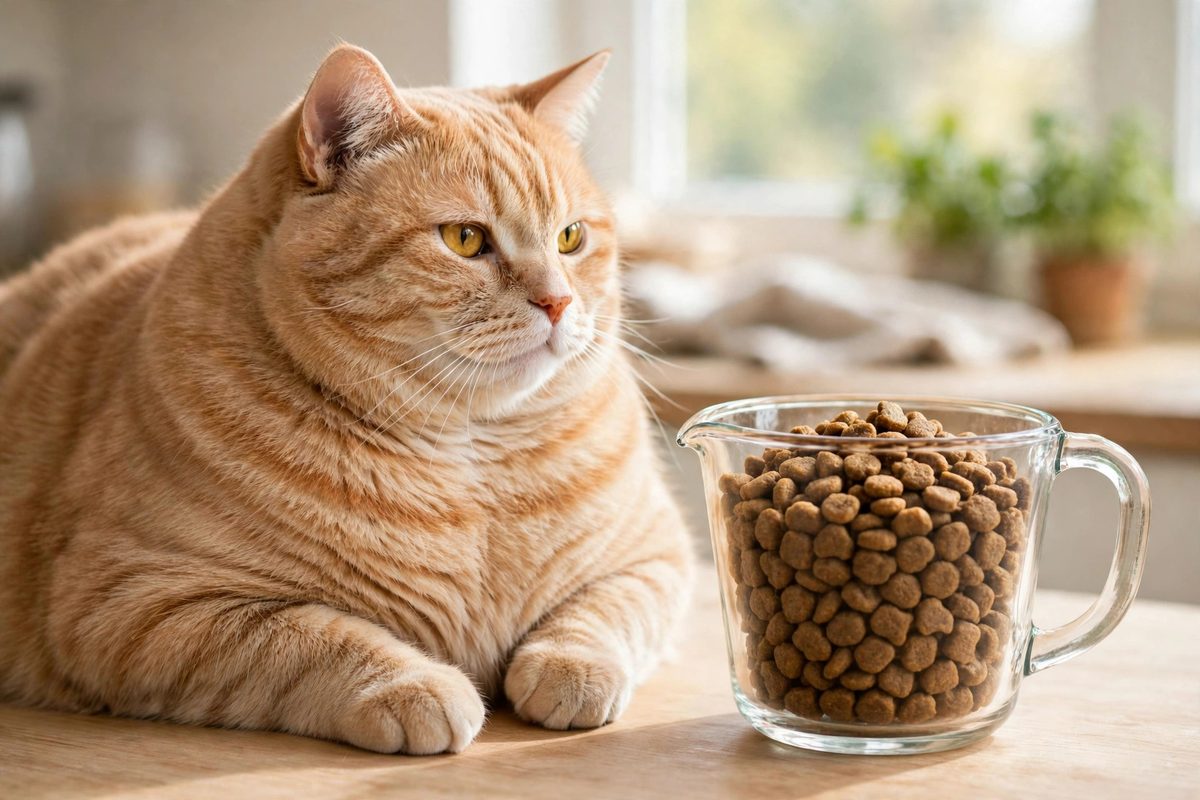
An overweight cat is easy to miss. Weight creeps on slowly, a few grams a month, and owners adjust to the new shape without noticing. Yet extra weight is the most common nutritional problem in pet cats, and it raises the risk of diabetes, joint disease, urinary problems, and a shorter life. The fix is not a crash diet, but a steady plan the whole household can follow.
How common is it, and why
Surveys suggest that around half of pet cats are overweight or obese. The causes are familiar: too much food, too many treats, and too little movement. Neutering lowers a cat's energy needs, and many owners keep feeding the same amount afterwards. Indoor cats burn fewer calories than outdoor cats, and bored cats may eat for entertainment.
Some cats are simply prone to weight gain, and certain breeds are more at risk. Medical causes, such as an underactive thyroid or medicines, are less common but worth checking if weight gain is rapid or comes with other changes.
The health risks
Extra weight strains the joints, which matters for a jumping animal, and it increases the risk of diabetes, because fat tissue makes the body less sensitive to insulin. Overweight cats are more likely to develop urinary problems, skin problems from poor grooming, and fatty liver disease if they stop eating.
Overweight cats also face higher anaesthetic risk and recover more slowly from surgery. Studies show that cats kept at a healthy weight live longer than overweight cats, by a meaningful margin. Weight is not a cosmetic issue.
A safe weight-loss plan
Aim to lose about one percent of body weight per month. Weigh the cat every two weeks and keep a chart. Start by measuring the current food for a week, then cut the daily amount by about ten percent. Use the calorie calculator on our homepage to find a target, and confirm it with your vet.
Feed two or three small meals a day, keep treats under ten percent of calories, and make sure everyone in the house follows the same plan. A note on the fridge and a single measuring scoop help. If the cat is not losing weight after a month, cut the food by another five to ten percent.
Movement and enrichment
Play is the other half of weight loss. Ten minutes of active play a day, in short sessions, makes a real difference. Use wand toys, paper balls, and puzzle feeders that make the cat work for food. Move the food bowl to a different spot, and use shelves and stairs so the cat climbs more.
Environmental enrichment also reduces boredom eating. A window perch, a scratching post, and rotating toys keep an indoor cat busy. A cat that is mentally stimulated eats less out of boredom, and moves more without being forced.
Getting the whole household on board
Weight loss fails when one person measures the food and another gives treats. Agree as a household on the plan before you start: who feeds the cat, how much, and how many treats a day. Write it on the fridge, with the measuring scoop beside the food, so there is no guessing.
Children can help by playing with the cat instead of feeding it, which burns calories and builds a bond. Visitors should be told not to feed the cat, however much it asks. If the cat begs, offer play or attention instead of food. A household that follows the same plan is the single biggest predictor of success.
Frequently Asked Questions
How do I know if my cat is overweight?
Feel the ribs: you should feel them easily under a thin fat cover. Look from above for a waist. If the ribs are hard to feel and the waist is gone, the cat is overweight.
How fast should an overweight cat lose weight?
About 1 percent of body weight per month. Faster loss can cause fatty liver disease in cats, so slow and steady is essential.
Should I use a diet cat food?
A veterinary weight-management food can help, because it is lower in calories but still filling. Ask your vet which one suits your cat.