Home › Guides
Senior Cat Nutrition: Feeding Cats Aged 7 and Older
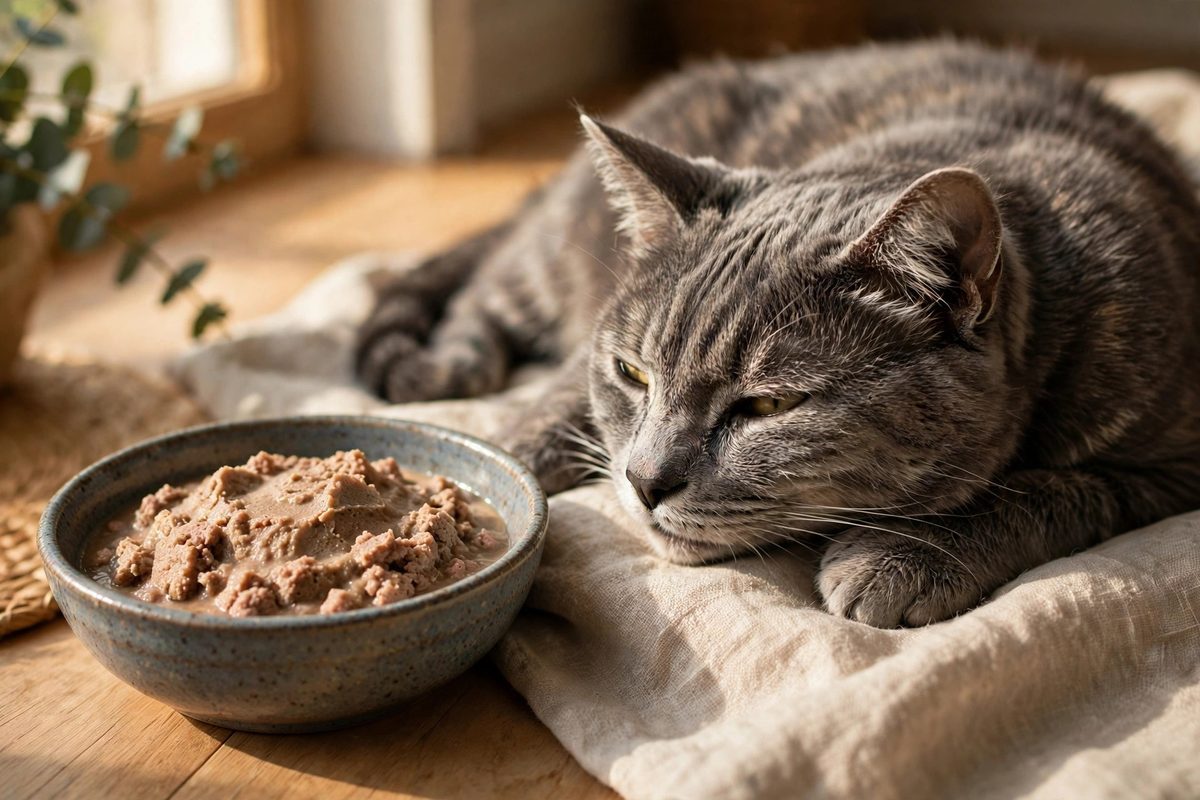
A cat becomes a senior at around seven years old, and its nutritional needs start to shift. Digestion becomes less efficient, the kidneys work harder, muscles are easier to lose, and the senses of smell and taste can fade. The right diet cannot stop ageing, but it can keep an older cat comfortable, mobile and well nourished for longer.
What changes as cats age
Older cats often eat a little less and move a little less, so their calorie needs may fall, yet their need for good-quality protein stays high. Losing muscle is a bigger risk than gaining fat in old age, so the goal is to preserve lean body mass with digestible protein rather than simply cutting food.
Kidney function declines in many senior cats. A diet that is moderate in phosphorus and easy on the kidneys can help, and your vet may recommend a specific renal diet if blood tests show kidney disease. Never start a prescription diet without veterinary advice, because the right food depends on the diagnosis.
Protein, hydration and appetite
Choose foods with named animal protein sources and good digestibility. Very cheap foods with low-quality protein are harder for an older gut to use. Wet food is often a good choice for seniors because it adds water, is easier to chew, and smells stronger, which helps a cat whose sense of smell has faded.
Warm wet food slightly, to body temperature, to release its aroma. Serve smaller meals more often, three times a day if you can, and keep the bowl in a quiet, warm spot. If a senior cat suddenly stops eating for more than a day, that is a vet matter, not a fussy-eating problem.
Weight: too much or too little
Some seniors gain weight as they slow down; others lose it. Both directions deserve attention. Extra weight strains joints and makes grooming harder, while weight loss in an old cat can signal dental pain, kidney disease, thyroid problems or other illness.
Weigh your senior cat monthly and keep a simple record. A loss of more than a few percent of body weight over a couple of months is worth a vet visit even if the cat seems fine. Feel the ribs and spine gently each week; bones that suddenly feel sharper mean muscle loss.
Joints, teeth and digestion
Many older cats have arthritis, even if they hide it well. A cat that hesitates before jumping, uses stairs less, or grooms less may be in pain. Raising food and water bowls slightly can help, and some senior diets include omega-3 fatty acids that support joint comfort. Ask your vet before adding any supplement.
Dental disease is common in seniors and can quietly reduce appetite. If your cat drops food, chews on one side, or has bad breath, a dental check is due. For sensitive stomachs, a simple diet with a single protein source and no sudden changes is usually kindest.
Working with your vet
Senior cats benefit from a vet check every six to twelve months, including blood and urine tests. These tests catch kidney disease, thyroid disease and diabetes early, when diet changes help most. Bring a note of what your cat eats, how much, and how its weight has changed.
Do not switch an old cat to a new food overnight. Change gradually over a week or two, and if the cat refuses the new food, go back a step rather than letting the cat go hungry. An older cat that stops eating can develop liver problems quickly, so appetite always comes first.
Frequently Asked Questions
Should senior cats eat less protein?
No, not by default. Healthy seniors still need good-quality protein to keep muscle. Only cats with diagnosed kidney disease may need a controlled-protein diet, on veterinary advice.
Is wet food better for senior cats?
Often yes. It adds water, is easier to eat, and smells stronger. A mix of wet and dry works well for many seniors.
How often should a senior cat see the vet?
At least once a year, ideally every six months, with blood and urine tests to catch age-related disease early.