Home › Guides
Toxic Foods for Cats: What Never to Feed and What to Do
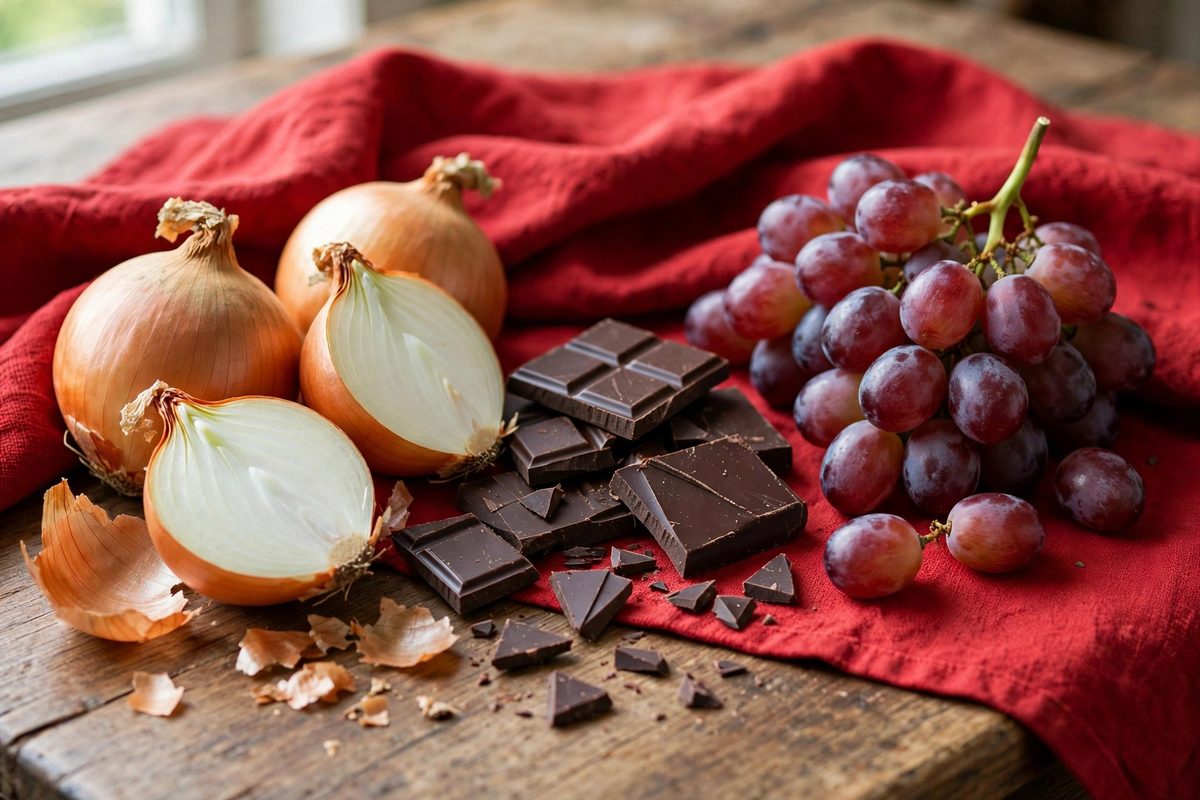
Cats are curious, and their small bodies react badly to foods that humans eat without thinking. A little onion in a sauce, a grape dropped on the floor, or a lily stem chewed out of curiosity can all cause serious harm. Knowing the list in advance is the simplest protection you have.
Onion, garlic and their relatives
Onion, garlic, chives, leeks and shallots all contain compounds that damage a cat's red blood cells and can cause anaemia. The effect is dose-dependent, and it can appear days after the cat ate the food. Cooked onion in gravy or baby food is just as risky as raw onion.
Garlic is more concentrated than onion, so even small amounts matter. Keep these foods out of the cat's bowl entirely, and be careful with leftovers, stock cubes and ready meals that list onion or garlic among the ingredients.
Grapes, raisins and chocolate
Grapes and raisins can cause sudden kidney failure in cats and dogs, and the toxic dose is not predictable. A single grape is enough reason to call a vet. Currants and sultanas carry the same risk.
Chocolate contains theobromine, which cats cannot process well. Dark chocolate is the most dangerous, but no chocolate is safe. Signs of chocolate poisoning include vomiting, restlessness, a fast heartbeat and tremors. Keep chocolate, cocoa powder and chocolate biscuits well out of reach.
Lilies: the most dangerous plant
All parts of a true lily, including the pollen, petals, leaves and the water in the vase, are highly toxic to cats. Even a small nibble can cause kidney failure within a day or two. If you have cats, do not bring lilies into the house at all.
If a cat brushes against a lily and gets pollen on its fur, it may lick it off while grooming. If you suspect any contact, wash the fur gently and contact a vet immediately, even if the cat looks fine. Early treatment makes a large difference.
Other foods to avoid
Xylitol, a sweetener found in sugar-free gum, sweets and some peanut butters, can cause a dangerous drop in blood sugar and liver damage. Alcohol is toxic in small amounts. Raw yeast dough can expand in the stomach and produce alcohol as it ferments.
Cooked bones can splinter and injure the mouth or gut. Raw fish and raw meat carry bacteria and parasites, and raw egg white contains a protein that blocks vitamin absorption. Caffeine in coffee, tea and energy drinks can cause restlessness, a fast heartbeat and tremors.
What to do if your cat eats something toxic
Stay calm and act quickly. Note what the cat ate, how much, and when. Do not try to make the cat vomit unless a vet tells you to, because that can cause more harm. Call your vet or an animal poison helpline straight away, and keep the packaging if there is any.
Take the cat to the vet even if it looks well. Many toxins cause damage before symptoms appear, and early treatment, such as fluids or activated charcoal, works best in the first hours. Keep the number of your vet and your nearest emergency vet clinic saved in your phone.
Frequently Asked Questions
Can cats eat a little milk?
Most adult cats cannot digest lactose well, so milk often causes an upset stomach. Fresh water and a complete cat food are enough.
Are grapes really dangerous for cats?
Yes. Grapes and raisins can cause kidney failure, and there is no known safe amount. Treat any grape eaten as an emergency.
What should I do first if my cat eats chocolate?
Call your vet immediately with the type of chocolate and the amount eaten. Do not wait for symptoms and do not try to induce vomiting yourself.