Home › Guides
Transitioning Cat Food: How to Switch Foods Without an Upset Stomach
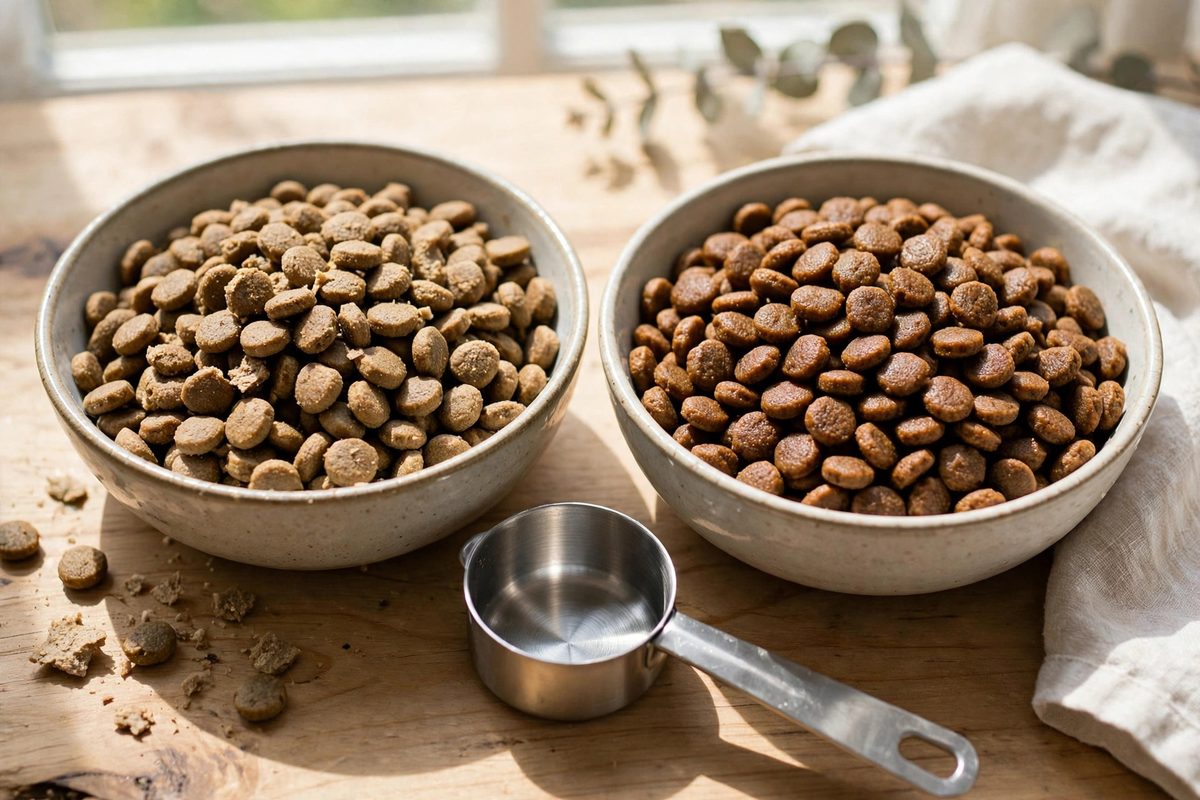
Cats are creatures of habit, and many react badly to a sudden change of food. A new food introduced overnight can cause vomiting, diarrhoea, or a cat that refuses to eat at all. The fix is simple: change slowly. A gradual transition over seven to ten days lets the gut adjust and gives a fussy cat time to accept the new taste.
Why slow is better
A cat's gut bacteria adapt to the food it eats. A sudden change disrupts that balance and can cause diarrhoea and stomach pain. Cats also rely on smell and texture, and a new food that smells unfamiliar may be rejected outright, even if it is nutritionally better.
A slow transition avoids both problems. The gut adjusts gradually, and the cat learns that the new smell and texture are safe. It also lets you spot problems early: if the cat develops soft stools at a certain mix, you can pause at that step for a few days before moving on.
The 7 to 10 day plan
Days one to two: feed 75 percent old food and 25 percent new food. Days three to four: half and half. Days five to six: 25 percent old food and 75 percent new food. Day seven onwards: all new food. If the cat is fussy or has a sensitive stomach, stretch the plan to two weeks.
Mix the foods in the same bowl so the cat cannot pick out only the old food. Keep meal times, bowl, and location the same, because changing everything at once makes the transition harder. Keep fresh water available and do not add treats during the transition, so you can tell whether any problem is caused by the new food.
Handling a fussy cat
Some cats refuse a new food even when it is introduced slowly. Warm the new food slightly to release its aroma, and offer it at the cat's normal meal time when it is hungry. Do not leave uneaten wet food out for more than half an hour, and do not offer an alternative food straight away, or the cat learns that refusing brings a better offer.
If the cat refuses the new food for more than a day, go back a step in the plan and try again more slowly. A cat that has not eaten for 24 hours should see a vet, because a cat that stops eating can develop liver problems quickly. Never starve a cat into accepting a new food.
When to stop and reconsider
Stop the transition if the cat develops persistent diarrhoea, vomiting, or a rash, and call your vet. These can be signs of an intolerance or allergy to an ingredient in the new food, rather than a normal adjustment. Keep a note of the ingredients in both foods so the vet can compare them.
If the cat does well on the new food, keep it for at least a month before judging it. A shiny coat, firm stools, and steady weight are signs the food suits the cat. If the cat does not do well, try a different food, and transition slowly again.
Frequently Asked Questions
How long should a food transition take?
Seven to ten days for most cats, and up to two weeks for fussy cats or those with sensitive stomachs.
What if my cat refuses the new food?
Go back a step, warm the food slightly, and try again more slowly. If the cat has not eaten for 24 hours, call your vet.
Can I switch from dry to wet food the same way?
Yes. Mix wet food into the dry food gradually over a week or two, increasing the wet share each day.