Home › Guides
Underweight Cats: When a Cat Is Too Thin and How to Help
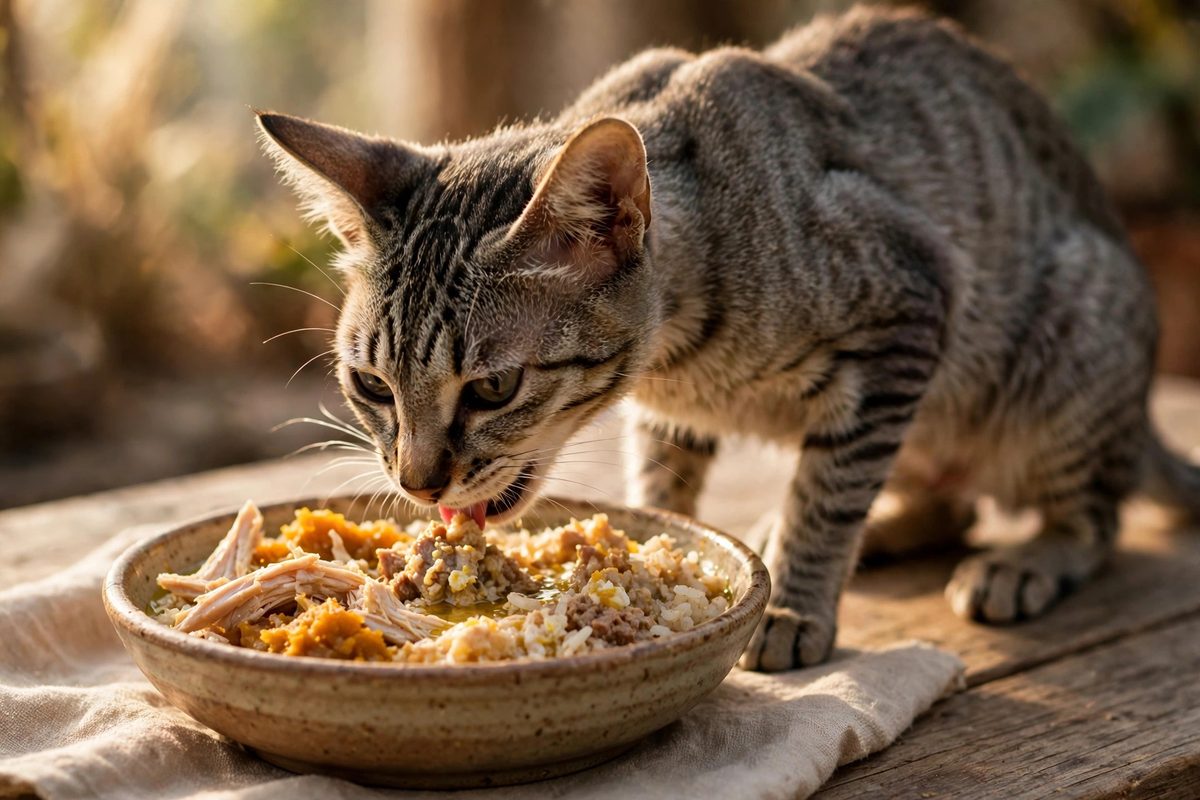
A thin cat worries owners, and rightly so. While most feeding advice focuses on overweight cats, an underweight cat needs attention too, and the cause matters more than the food. A cat that is losing weight may be ill, in pain, or stressed, and simply feeding more will not fix the underlying problem. The first step is always to find out why.
How to tell if a cat is underweight
On the nine-point body condition scale, a score below four means underweight. The ribs are easy to see as well as feel, the spine and hip bones are prominent, and the waist is very marked from above. The cat may have a dull coat and less energy than usual.
Weigh the cat weekly on the same scales and keep a record. A loss of more than five percent of body weight over a few weeks is significant and deserves a vet visit, even if the cat seems well in other ways.
Common causes of weight loss
Dental pain is a common cause: a cat with a sore tooth eats less, or drops food. Kidney disease, thyroid disease, diabetes, and digestive problems can all cause weight loss, often before other symptoms appear. Parasites, especially in kittens or outdoor cats, can also keep a cat thin.
Stress is another cause. A new pet, a house move, building work, or a change in routine can put a cat off its food. Cats also lose weight if they cannot reach their food, for example if a larger cat guards the bowl, or if the bowl is in a noisy or frightening place.
What to do first
Book a vet visit. Blood and urine tests can catch kidney disease, thyroid disease, and diabetes early, when treatment helps most. A dental check is part of the visit, and the vet may check for parasites. Bring a note of what the cat eats, how much, and how its weight has changed.
Do not simply feed much more of the same food. A sudden increase can cause diarrhoea, and if the cause is medical, extra food will not help. Follow the vet's advice on the cause first, and on feeding second.
Helping a thin cat gain weight
Once the vet has ruled out or treated the cause, focus on calorie-dense, easily digested food. A kitten food or a recovery food is often higher in calories than an adult food, and your vet may recommend one. Warm the food slightly to release its aroma, and offer small meals four or five times a day rather than two large ones.
Feed in a quiet, safe place where the cat feels relaxed, and keep fresh water nearby. If there are several cats, feed the thin cat separately so it is not rushed or bullied. Weigh the cat weekly and aim for a slow, steady gain. If the cat refuses food for more than a day, call the vet, because a cat that stops eating can develop liver problems quickly.
Frequently Asked Questions
My cat is thin but eats well. What could it be?
Thyroid disease, diabetes, kidney disease or parasites can all cause weight loss despite a good appetite. A vet visit with blood tests is the right first step.
What food helps a thin cat gain weight?
A calorie-dense, easily digested food, such as a kitten or recovery food recommended by your vet, fed in small frequent meals.
How fast should a thin cat gain weight?
Slowly and steadily. Weigh weekly and expect gradual gains over several weeks. Sudden changes in either direction deserve a vet check.